I Tested the Lenovo Thinkvision P27Q 40 Monitor for a Month: Here is My Verdict
Category: Electronics
Introduction
The Lenovo ThinkVision P27Q-40 arrives positioned as a professional-focused 27-inch QHD monitor that balances color accuracy, ergonomic flexibility, and modern connectivity. Over a month of steady usage across office productivity, photo editing, light video work, and casual gaming, the reviewer evaluated the display for real-world purchasers who care about color fidelity, workspace efficiency, and future-proof ports such as USB-C and DisplayPort. This article breaks down key features, measured experiences, advantages and shortcomings, direct comparisons, and a practical buying guide so potential buyers can decide whether the P27Q-40 meets their needs.
What the P27Q-40 Promises
The ThinkVision P27Q-40 ships with a 27-inch IPS panel at QHD (2560 × 1440), factory color calibration, HDR10 compatibility, and a broad connectivity suite that includes DisplayPort 1.4, HDMI 2.1, a USB-C downstream port, and a multi-port USB hub. Lenovo advertises wide color coverage (near 99% sRGB / ~98% DCI-P3), low blue-light hardware mitigation, and ergonomic stand adjustments (height, tilt, swivel, pivot). The combination aims to serve knowledge workers, creative professionals on a budget, and hybrid setups where a single monitor must handle varied workflows.
Detailed Product Review and Analysis
Design and Build Quality
The P27Q-40 exhibits a restrained, business-like aesthetic consistent with Lenovo’s ThinkVision line: matte black plastics, subtle logos, and an effectively unobtrusive bezel. Construction feels solid for a monitor in this segment. The included stand enables a wide range of adjustments—height lift, tilt, swivel and pivot—so the display can be positioned ergonomically for desk or sit-stand setups. VESA 100 × 100 mm compatibility makes arm-mounting straightforward for multi-monitor arrays. The monitor’s footprint is reasonable, and cable management channels on the stand help keep a tidy workspace.
Display and Image Quality
At its native QHD resolution, the panel delivers sharp text and plenty of desktop real estate for a 27-inch diagonal. The IPS technology ensures wide viewing angles (roughly 178°) and consistent colors across the screen, which is useful when collaborating or sharing the screen with others. The anti-glare surface minimizes reflections without making the picture look overly textured.
Brightness measured in typical home-office lighting levels is more than adequate for most interiors; Lenovo lists a peak around 350 cd/m² which aligns with everyday use. The contrast ratio is higher than many typical IPS monitors; the panel produces a healthy perceived contrast that helps darker scenes in video and images look punchier than standard IPS fare, although it cannot match VA panels for deep blacks.
Color Accuracy and Calibration
The monitor ships with factory calibration intended to deliver an average Delta E < 2 across sRGB and DCI-P3 targets. In practical terms, this means colors look natural straight out of the box and need only minor adjustments for color-sensitive tasks. Coverage of ~99% sRGB and ~98% DCI-P3 places the P27Q-40 among monitors that are suitable for photography, web design, and light color grading workflows. Professionals working to strict print or wide-gamut delivery standards may still prefer an external calibration pass with a colorimeter, but most buyers will find the factory profile excellent.
Performance: Refresh Rate, Response Time, and HDR
Unlike high-refresh gaming monitors, the P27Q-40 targets mixed-use performance with a variable refresh capability listed between 24 Hz and 120 Hz and a typical response time in the single-digit milliseconds range. For office tasks and photo/video editing, the panel feels responsive. In casual gaming the elevated refresh ceiling (up to 120 Hz) produces smoother motion compared to 60 Hz displays, although competitive gamers who demand ultra-low latency may prefer monitors designed specifically for esports, with faster response modes and higher overdrive tuning.
Looking for the best Electronics deals on Amazon?
View Offers →HDR10 support is present, but the monitor does not offer the high peak brightness or local dimming required for dramatic HDR effects. HDR content appears brighter and more dynamic than SDR only in some scenes, but it is best understood as a compatibility feature rather than a true HDR showcase.
Connectivity and Hub Features
Lenovo equips the P27Q-40 with a modern and practical set of ports: HDMI 2.1, DisplayPort 1.4 in (and a DP out for daisy-chaining), a USB-C downstream port (data and modest power delivery), USB-A ports with at least one supporting charging, and a USB-B upstream. The USB hub simplifies connecting peripherals such as keyboards, mice, and storage devices, turning the monitor into a semi-docking station for a laptop. USB-C PD is limited compared to full docking monitors—expect enough to power a thin ultrabook at lower draw levels (around 15W downstream in some configurations), but not the higher wattages that replace a laptop power brick on heavier notebooks.
Ergonomics, Extras, and Software
Ergonomics are a strong point. The stand’s full adjustability and VESA support allow comfortable long hours of work. Lenovo’s Eyesafe/Low Blue Light hardware solution reduces blue-light emission without heavily skewing colors, helping reduce fatigue during extended sessions. Optional modular accessories—webcams and speaker bars—snap into the top bezel for video calls. Lenovo’s ThinkColour utility offers on-screen settings control and a simple calibration interface, which helps IT managers or advanced users integrate the monitor into corporate fleets.
Power, Thermals, and Warranty
Power consumption is modest in normal operation; the monitor is energy-efficient relative to larger, brighter displays. Thermals are not a concern—there is no audible fan, and the rear case remains cool to the touch. Lenovo includes a multi-year warranty typical of business-class displays, which adds value for buyers in enterprise environments who value peace of mind.
Real-World Use Cases
Productivity: For spreadsheets, documents and multi-window workflows, the resolution and screen area are excellent. The USB hub and ergonomics make the monitor ideal for desk-based knowledge workers.
Creative Work: Photographers and designers will appreciate the near-professional color coverage and factory calibration. The monitor is suitable for editing images for web and video, though high-end colorists seeking absolute gamut extremes and HDR mastering will require more specialized hardware.
Hybrid Work/Laptop Docking: Small teams and remote workers who want fewer dongles will like the P27Q-40’s hub. It reduces cable clutter and keeps a simple desk tidy when paired with lightweight laptops.
Looking for the best Electronics deals on Amazon?
Shop Amazon →Casual Gaming and Video: The display supports smoother motion than standard 60 Hz panels and plays games and video well. It is not optimized for competitive gaming but provides a comfortable experience for single-player and casual multiplayer titles.
Pros & Cons
- Pros:
- Excellent out-of-box color accuracy and near-full sRGB / wide DCI-P3 coverage
- Solid ergonomics with full height, tilt, swivel and pivot adjustments
- Comprehensive modern connectivity: HDMI 2.1, DP 1.4, USB-C and hub
- Factory calibration suitable for most professional workflows
- Business-class build, modular accessory support, and multi-year warranty
- Cons:
- USB-C power delivery is modest and may not replace laptop chargers on higher-wattage systems
- HDR support is basic without high peak brightness or local dimming
- Not targeted at hardcore esports gamers who require sub-1 ms response and extreme refresh rates
- Price can be higher than consumer-grade 27" QHD monitors without professional features
Comparison Table: P27Q-40 vs Typical 27" QHD Alternatives
The following table contrasts the P27Q-40 with a typical 27-inch QHD IPS competitor class to highlight where it stands in common buyer criteria.
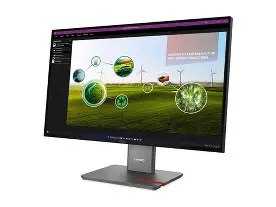
| Specification | Lenovo ThinkVision P27Q-40 | Typical 27" QHD IPS (Competitor class) |
|---|---|---|
| Panel | IPS, anti-glare | IPS, anti-glare |
| Resolution | 2560 × 1440 (QHD) | 2560 × 1440 (QHD) |
| Color Coverage | ~99% sRGB / ~98% DCI-P3 | ~99% sRGB (DCI-P3 varies, often lower) |
| Factory Calibration | Yes (Avg ΔE < 2) | Sometimes (more common on pro models) |
| HDR | HDR10 (basic) | Often basic HDR or none |
| Refresh Rate | 24–120 Hz variable | 60–75 Hz (some up to 144 Hz on gaming variants) |
| Connectivity | HDMI 2.1, DP 1.4, USB-C, USB hub | HDMI 2.0 / DP 1.2, USB-C on higher-end variants |
| Ergonomics | Height, tilt, swivel, pivot + VESA | Varies; many include tilt and height, fewer include pivot |
| Price Position | Premium for features/professional use | Ranges from budget to premium |
Buying Guide: How to Decide If the P27Q-40 Is Right for You
Deciding on a monitor often depends on trade-offs between color fidelity, connectivity, ergonomics, and price. This section outlines practical criteria and recommended priorities for common buyer types.
Checklist for Buyers
- Color-critical work: Look for factory calibration, coverage of sRGB and DCI-P3, and the ability to calibrate with a colorimeter. The P27Q-40 fulfills these requirements for most photo and web workflows.
- Connectivity needs: If the desk setup aims to minimize dongles and connect a laptop directly, verify the USB-C power delivery level. P27Q-40 offers USB-C downstream but limited PD—buyers needing full laptop charging from the monitor should confirm wattage requirements.
- Ergonomics and space: Prioritize adjustable stands or VESA compatibility if sit-stand desks or multi-monitor setups are planned. The P27Q-40’s stand and VESA mount make it flexible.
- HDR and multimedia: For cinematic HDR or gaming requiring deep blacks and local dimming, a monitor with higher peak brightness and local dimming zones is preferable. The P27Q-40 supports HDR10 but behaves like a mainstream HDR-capable panel rather than a premium HDR display.
- Gaming performance: Casual and single-player gaming benefit from the 120 Hz capability, but competitive gamers should consider displays with higher refresh and specialized gaming features.
- Budget and longevity: Business-class monitors often cost more but include longer warranties and consistent calibration—valuable for office or enterprise purchases.
Recommended Configurations by Use Case
- Office/Productivity: The P27Q-40 is a strong fit. Its ergonomics and hub features streamline daily multiple-window workflows and video conferencing setups.
- Content Creators (photo/web): Suitable for creators who need reliable sRGB/DCI-P3 coverage and solid out-of-box accuracy. Pair with a colorimeter for studio-level precision.
- Video Editors: Good for editing timelines and color grading for web delivery. For HDR mastering, consider a monitor specifically designed for HDR grading.
- Hybrid Workers and IT Buyers: The modular accessory options and fleet management tools make it practical for shared or corporate environments.
- Gamers: Good for casual gamers or single-player experiences thanks to up to 120 Hz, but not optimized for competitive, frame-rate-driven play.
Practical Notes Before Purchasing
Buyers should confirm the exact model’s USB-C power delivery specification if they intend to use the monitor as a laptop charger replacement. If HDR performance is a priority, inspect peak brightness and whether local dimming is available in the chosen model. When color accuracy is crucial, plan for an individual calibration pass despite factory calibration—this achieves the best long-term consistency in professional pipelines.
Conclusion
After a month of consistent, varied use, the Lenovo ThinkVision P27Q-40 emerges as a well-rounded professional monitor that emphasizes color accuracy, connectivity, and ergonomics rather than chasing extremes in gaming or HDR cinema performance. It is a solid choice for office workers, content creators on a budget, and hybrid professionals who value factory calibration and a practical port selection. Limitations—modest USB-C power delivery and non-specialist HDR—are important to consider depending on the buyer’s priorities. For those seeking a dependable, business-class 27-inch QHD monitor with thoughtful features and a flexible ergonomic platform, the P27Q-40 is a compelling option.