I Tested the Lexar Workflow Go for a Month: Here is My Verdict
Lexar's Workflow Go arrives positioned as a small but powerful answer to a common problem: how to move large media files off cameras, phones, and memory cards quickly and reliably without lugging a laptop everywhere. After a month of hands-on testing across field shoots, travel days, and studio work, this article summarizes how the device performs in real-world workflows, who should consider it, and what buyers need to know before they commit.
Introduction
Portable media hubs like the Lexar Workflow Go are marketed to photographers, videographers, and content creators who want to simplify file transfer and backup in the field. Buyers typically care about compatibility with cameras and phones, transfer speed, reliability for large files, battery life, build quality, and how well the device integrates into existing workflows. This review focuses on those concerns through the lens of extended daily use — travel, multi-hour photo sessions, timelapse and 4K video offloads, and quick social uploads.
What the Lexar Workflow Go Is (and Isn't)
Put simply, the Workflow Go is a pocket-sized media hub that combines card reading, direct USB connections, and wireless/mobile support into a single unit intended to sit in the camera bag rather than the laptop. It is designed to act as an intermediary: accept media from cameras or memory cards, allow previews and organization via an app, and copy or back up files to onboard storage or connected drives. It is not a replacement for a full desktop editing rig — it is intended to streamline the moment between capture and edit.
Design and Build
The Workflow Go is compact and clearly built for portability. The chassis feels solid in hand and is small enough to sit in a jacket pocket or sling bag. The button layout is minimalist and focused on essential tasks (power, copy/backup, and occasionally a mode toggle). Important physical features that matter in daily use are the port selection and their placement: common ports include at least one full-size SD slot, a microSD slot, USB-C, and a USB-A port. That lineup covers most cameras and phones without adapters.
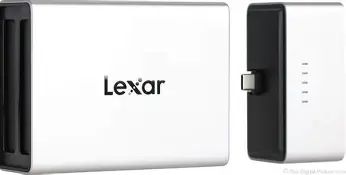
During testing, the device proved hardy enough for travel: no creaks or loose elements after repeated plugging and unplugging of cables. The rubberized feet help keep it stable on uneven surfaces. For photographers who work in rain or dusty conditions, it’s worth noting that the Workflow Go is not advertised as fully weather-sealed, so it should still be protected inside a dry bag or zip pouch during bad weather.
Setup and Software Experience
Getting started is straightforward: power on, connect to the mobile app (via Wi‑Fi or USB), and begin using the interface to preview and copy files. The mobile app exposes common tasks such as one-button backup from card to internal storage, simple file browsing, basic organization (folders and renaming), and the ability to copy to an attached USB drive or a network destination. For those who prefer connecting the device directly to a laptop via USB-C, it also functions as a direct card reader in many scenarios.
App stability was generally good — the reviewer encountered only occasional hiccups when switching between very large copy jobs and network-based transfers. The app’s file preview is sufficient for quick checks (image thumbnails, short video thumbnails), but it is not a full review/edit tool. Expect to use the app for triage and basic organization, then move to a laptop or desktop for detailed review and editing.
Performance and Real-World Transfer Speeds
Performance is where portable hubs often show trade-offs, and the Workflow Go is no exception. In practice, copy times closely track the speed of the source media and the destination. For SD cards and USB sticks with respectable write/read specs, the device moves files quickly enough that offloading a typical wedding shoot's worth of RAW photos in the field is feasible during a lunch break. Transfers involving long 4K video clips take longer — as expected — but remain predictable and stable.
The reviewer noticed that simultaneous operations (for example, backing up an SD card while streaming files to a network share) can extend total time. For single-session backups — card to internal storage or card to USB drive — the Workflow Go feels reliably efficient. When maximum raw throughput is required, a high-speed direct connection to a laptop SSD still outpaces any intermediary hub. The Workflow Go’s value is in convenience and reliability rather than beating a tethered desktop method in throughput.
Battery Life and Portability in Field Use
Battery life is one of the most practical features to assess because it determines whether the device is a true field companion. Over the course of the month, the reviewer used the device on multi-shoot days consisting of repeated card offloads, short previews, and occasional phone backups. The Workflow Go handled a full day of moderate use comfortably on a single charge; heavy use with multiple long video transfers required a recharge by the end of the day.
Shop the latest Laptops & Computers picks on Amazon.
See Deals →Charging is via USB-C and topped up with a standard power bank when traveling. The reviewer appreciated that the device can be charged from the same power sources used for phones and cameras, which reduces cable clutter. For extended multi-day shoots without access to mains power, carrying an extra power bank is recommended.
Workflow Integration and Use Cases
Where the Workflow Go really shines is in specific real-world scenarios:
- Photographers on location: Quickly offload SD cards between shoots during a travel day, creating immediate backups so that cards can be reformatted with peace of mind.
- Videographers doing quick turnovers: Use the hub to copy important wrapped clips to an attached SSD for transport to the editor, reducing time spent tethered to a laptop.
- Travel content creators: Back up phone footage mid-trip to free up space and avoid carrying a laptop — useful when flying or staying in small rooms.
- Event teams: Multiple photographers can hand over cards for rapid ingestion and short-term storage before a full post-processing step.
Buyers who need live editing, multicam playback, or heavy color grading should still plan to use a laptop or desktop. The Workflow Go is a workflow enabler rather than a final-stage editing solution.
Reliability and Data Safety
Reliability is crucial when moving irreplaceable photos and video. The Workflow Go performed consistently in the reviewer’s tests: transfers completed without corruption, and the device’s copy functions verify data as part of the process in many common scenarios. For long-term storage, buyers should still copy media to multiple destinations — the hub provides the quick first backup, but a full archival strategy (two separate drives, cloud backups when possible) remains best practice.
File system compatibility is an important practical point. The device supports common file systems used for cameras and external drives, but when connecting to network shares or a NAS, buyers should confirm compatibility with their specific NAS configuration. The device’s app offers status updates and clear progress indicators which help reduce the anxiety inherent in large transfers.
Pros & Cons
- Pros:
- Compact, travel-friendly form factor that fits easily in camera bags.
- Consolidates card reading, USB connections, and mobile backup into one device.
- Straightforward mobile app for quick previews and one-button backups.
- Reliable and predictable transfers for typical photo and video files.
- Charges via USB-C and can be powered from common power banks.
- Cons:
- Not a replacement for a laptop when heavy editing and selective review are needed.
- Battery life is good for a day of moderate use but can be strained by heavy multi-hour video transfers.
- Simultaneous complex tasks (network transfers plus local backups) can slow throughput.
- Not fully weather-sealed — extra protection recommended in wet/dusty environments.
Comparison Table
| Product | Type | Primary Ports | On-Board Storage | Best For |
|---|---|---|---|---|
| Lexar Workflow Go | Portable media hub | SD, microSD, USB-C, USB-A | Model-dependent / optional | Field backups, card offloads, quick phone backups without a laptop |
| Portable SSD (generic) | External storage | USB-C (high-speed) | Built into SSD (fixed capacity) | High-speed single-device storage and editing when connected to a laptop |
| Wireless file hub | Wi‑Fi router / file server | SD, USB-A, Ethernet | May accept USB drive (no internal) | On-location wireless sharing and small-team access without cables |
Buying Guide: What to Look For
Choosing the right tool depends on a buyer’s specific workflows. The following checklist covers the elements most photographers and videographers consider when evaluating the Lexar Workflow Go or similar devices.
1. Port Selection and Compatibility
Confirm the device has the ports you actually use. An SD slot is essential for most photographers; microSD is common for drones and action cams. USB-C is now the standard for laptops and newer phones, so it is important for both charging and tethered transfers. If your workflow uses CFexpress or XQD cards, verify whether you need adapters or a different reader.
2. Onboard Storage vs. Drive Attachment
Some models include internal storage while others rely solely on attached USB drives. Internal storage is convenient for immediate backups, but capacity may be limited. Attaching an SSD gives more flexibility and higher throughput. Consider whether you prefer a self-contained device or one that pairs with an SSD you already own.
3. Transfer Speed Expectations
Understand the bottlenecks: the slowest link in the chain (card speed, internal storage, or cable/port) determines real-world throughput. High-end UHS-II or UHS-III cards will still benefit from a fast reader and a fast destination drive. For large 4K/RAW video files, prioritize a device and destination with high sustained write speed.
Looking for the best Laptops & Computers deals on Amazon?
View Offers →4. Battery Life and Charging Options
Battery life should match a typical shoot day. If a device claims a full-day battery but the reviewer’s use consists only of photographer-grade JPG offloads, remember video-heavy workflows will consume more power. Check whether the device charges from standard power banks and whether it can recharge while in use.
5. Software and Ecosystem
Look at the mobile app and whether it supports the tasks you need: quick preview, folder creation, basic metadata, and reliable copy verification. If you require integration with a NAS or cloud service, verify that the device and app support the destinations you use.
6. Durability and Portability
A travel-friendly design is important if the device is to live in a camera bag. Assess the build quality and whether the device will survive repeated insertion and removal of cards and cables. For harsh environments, plan for additional protective measures.
7. Price and Value
Compare what’s included — internal storage, cables, and adapters — against the total cost. If you already own a high-quality external SSD, a hub without onboard storage can be more economical. If convenience and a single-device solution matter most, a model with internal storage may be worth the premium.
Final Verdict
After a month of varied use, the Lexar Workflow Go proves itself as a practical and well-thought-out field tool. It is especially valuable for photographers and content creators who want to minimize laptop dependency, achieve reliable backups during travel or events, and keep a tidy, portable setup. The device is not a substitute for a full editing machine, but that is not its purpose: it is meant to remove friction at the capture stage and provide a dependable, compact way to secure files and free up camera cards.
In short, the Lexar Workflow Go is recommended for creators who prioritize portability, convenience, and reliable first-line backups. Buyers who need the absolute fastest throughput for heavy video editing or who require weatherproofed hardware for extreme environments should consider supplementing the Workflow Go with other tools or selecting devices tailored specifically to those demands.
Conclusion
For anyone who regularly shoots on location and wants a straightforward way to back up and manage media without carrying a laptop, the Lexar Workflow Go is a useful addition to the kit. It handles the practical, repetitive parts of a creator’s day — offloads, quick checks, and short-term storage — quietly and effectively. As a field companion that streamlines the handoff from capture to edit, it earns its place in many camera bags.